How to use our fishing calendar
Planning your next fishing trip in Andrews, United States ? Today is a poor day for fishing. Our comprehensive fishing almanac combines our popular solunar tables, moon times, sunrise and sunset times, and a 7-day fishing calendar so you always know the best fishing times in your area. We analyse major and minor solunar bite times, rate each day on a five-star scale, and pair it with localized weather forecasts so you can quickly tell whether today is a good day to fish without juggling multiple tabs. Be sure to bookmark this page so you never miss a bite. view bite times...
- Check our unique Solunar Clock for precise solunar tables and the best moon phases.
- Use the forecast calendar section to sync bite times with major weather changes.
- Analyze the forecasted weather conditions, such as wind, barometric pressure and rain to plan your fishing session.
- Jump to the 7-Day Fishing Calendar for an extended fishing forecast, then explore nearby fishing spots on the interactive map.
Fishing in Andrews, Texas centers on a collection of hard‑working West Texas reservoirs and community ponds that offer surprisingly consistent bass, catfish, and panfish action in the middle of oil country. Anglers from Andrews frequently target nearby lakes like Lake JB Thomas, Moss Creek Lake, and O.C. Fisher Lake, focusing on warm‑water species that thrive in the desert climate. With the right seasonal approach and an understanding of these wind‑swept, structure‑rich lakes, anglers can find quality bites year‑round. read more...
Sun and Moon Times
-
Nautical Twilight begins:Sunrise:
-
Sunset:Nautical Twilight ends:
-
Moonrise:
-
Moonset:
-
Moon over:
-
Moon under:
-
Visibility:37%
-
 First Quarter Moon
-
Distance to earth:398,248 kmProximity:17.5 %
Moon Phases for Andrews
-
poor Day
-
major Time:05:05 am - 07:05 am
-
minor Time:12:21 pm - 02:21 pm
-
major Time:05:35 pm - 07:35 pm
-
minor Time:10:49 pm - 12:49 am
Current Fishing Weather
Wind Speed and Direction
Wind Direction:
Wind Speed:
Wind Direction and Speed are one of the most important aspects for choosing a fishing spot. An offshore wind can help land-based anglers with longer casting distances, while an onshore wind will make kayak fishing safer. Often fish will also move to certain feeding areas depending on the wind direction. Check out the long term wind forecast at the charts below.
Fishing Barometer
Atmospheric Pressure:
Change since midnight:
Trend for next 6 hours:
Atmospheric or Barometric Pressure affects fish activity. The best fishing can be had on a rising barometer and also the time just before it is falling. A steady barometer in the higher ranges can also mean good fishing. A falling or low barometer reading without much change is usually not a very good time for fishing.
UV Effect on Fishing
As a rule of thumb, the higher the UV index, the deeper fish will move. Shallow water fishing is best done at times with a low UV index. When the UV is high, stick to early mornings, late evenings and shaded areas. The effect is less noticable in deeper water, but often a higher UV index can produce good results in the deep.
7 Day Fishing Weather
| Date | Major Bite Times | Minor Bite Times | Sun | Moon | Moonphase |
|---|---|---|---|---|---|
|
|
-
-
|
-
-
|
R: S: |
R: S: |
 Waxing Crescent |
|
|
-
-
|
-
-
|
R: S: |
R: S: |
First Quarter Moon |
|
|
-
-
|
-
-
|
R: S: |
R: S: |
First Quarter Moon |
|
|
-
-
|
-
-
|
R: S: |
R: S: |
First Quarter Moon |
|
|
-
-
|
-
-
|
R: S: |
R: S: |
First Quarter Moon |
|
|
-
-
|
-
-
|
R: S: |
R: S: |
 Waxing Gibbous |
|
|
-
-
|
-
-
|
R: S: |
R: S: |
Waxing Gibbous |
|
|
-
-
|
-
-
|
R: S: |
R: S: |
Waxing Gibbous |
Fishing Overview Andrews
Andrews, Texas anglers rely on a network of regional reservoirs, stock tanks, and city ponds scattered across the semi‑arid plains. While no large natural lakes sit inside city limits, popular fishing destinations within a practical drive include Lake JB Thomas, Moss Creek Lake, O.C. Fisher Lake, and several smaller municipal impoundments. These waters are classic West Texas fisheries: low water, wind, stained visibility, and abundant rock, brush, and shoreline irregularities that concentrate fish.
Seasonal patterns revolve around temperature and wind. In late winter and early spring, prespawn largemouth bass stage on primary and secondary points, rocky breaks, and the first significant depth change outside shallow coves. Slow‑rolled spinnerbaits, lipless crankbaits, and jigs worked along rock transitions and old creek channels are consistent producers. By March–April, bass slide into protected pockets to spawn; weightless soft plastics, wacky‑rigged worms, and compact jigs flipped to flooded brush, salt‑cedar, and laydowns are reliable.
As summer heat sets in, fishing shifts to a classic low‑light pattern. Focus on dawn, dusk, and overnight trips. Largemouth bass pull to deeper ledges, submerged roadbeds, and channel swings. Carolina‑rigged plastics, deep‑diving crankbaits, and football jigs dragged along hard bottom excel. Wind is your ally: windblown banks funnel bait and keep surface temps in check, making them prime zones for white bass and hybrid stripers chasing shad. Cast small spoons, swimbaits, or tail‑spinners when you see surface activity or mark schools on electronics.
Catfish are a staple near Andrews and provide steady action almost year‑round. Channel and blue catfish respond well to punch baits, cut shad, and stink baits fished on slip‑rigs along channel edges, riprap, and windward points. After strong winds, target the downwind side of reservoirs where debris and scent collect. Night fishing in summer, with baits placed on subtle depth changes or along old creek channels, often yields the best numbers and bigger blues. Flathead catfish prefer live bait—sunfish or shad—presented around rock piles, timber, and steep breaks.
Crappie and panfish offer a more finesse‑oriented option. In spring, crappie move shallow into shoreline brush, flooded willows, and boat docks; small jigs under a slip float or live minnows are dependable. The rest of the year, they relate to deeper brush piles, bridge pilings, and submerged timber. Use electronics to find stacked fish, then vertically jig 1/16–1/8 oz soft plastics or marabou jigs just above the school. Bluegill and other sunfish crowd around riprap, weed edges, and any wood cover, and can be taken on small pieces of worm or tiny jigs—ideal for introducing kids to fishing.
Key tactical tips for the Andrews area include embracing stained water and wind. Choose lures with vibration and flash—spinnerbaits, chatterbaits, and rattling crankbaits—for bass in off‑color water. For catfish, prioritize fresh bait and keep rigs simple: a slip sinker, swivel, short leader, and sharp circle hook. Because water levels can fluctuate dramatically, always pay attention to newly flooded cover and changes in shoreline contours; these fresh zones often hold the most active fish.
Whether you’re walking the bank of a small city pond or trailering to a regional reservoir, matching your approach to the season, wind, and water clarity is the key to consistent fishing success around Andrews, Texas.
Interactive Fishing Map for the greater Andrews area
We found a total of 14 potential fishing spots nearby Andrews. Below you can find them organized on a map. Points, Headlands, Reefs, Islands, Channels, etc can all be productive fishing spots. As these are user submitted spots, there might be some errors in the exact location. You also need to cross check local fishing regulations. Some of the spots might be in or around marine reserves or other locations that cannot be fished. If you click on a location marker it will bring up some details and a quick link to google search, satellite maps and fishing times. Tip: Click/Tap on a new area to load more fishing spots.
Shafter Lake - 13.50038701561km , Whalen Lake - 25.77880646811km , Baird Lake - 28.17563022224km , Bum Lake - 32.97059785521km , Antelope Lake - 35.52511749564km , Embar Lake - 35.61700083497km , Northwest Lake - 36.33511907215km , James Lake - 36.67707694174km , Mowing Machine Lake - 37.73041334856km , Plover Lake - 39.57973936956km , Prairie Dog Lake - 39.71418604164km , Mill in the Flat Pond - 41.62992542292km , Cheyenne Lake - 45.33776332073km , North Lake - 49.92800607144km
 Harbours and
Marinas
Harbours and
Marinas
 Beaches
 Bays
Bays
 Wharfs
 Points,Reefs,etc
Latest Catches

uploaded by: Robert Raffle

uploaded by: Robert Raffle

uploaded by: Johnnie Williams

uploaded by: Johnnie Williams

uploaded by: Alex Pagels

uploaded by: rich77
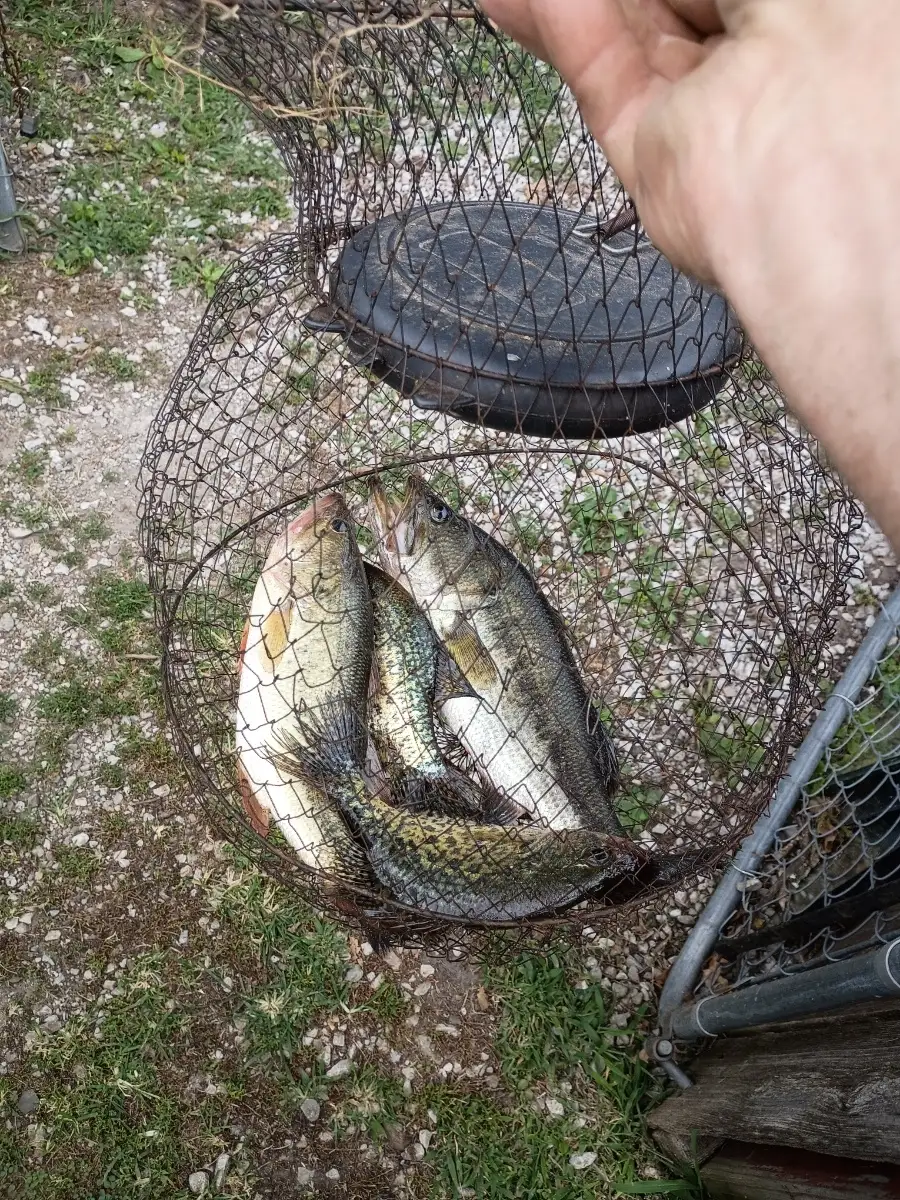
uploaded by: Charlie Pifer

uploaded by: Brandi Dodson

uploaded by: Marc Mooney

uploaded by: Jeffrey Reynolds


Comments